

When Your Allergic Rhinitis Is NOT Allergic
Most of the readers of this blog site are familiar with the symptoms of rhinitis:
- Stuffy nose – nasal congestion
- Runny nose – “rhinorrhea”
- Phlegm in the throat – “post-nasal drip”
Most of us make the assumption that these are signs of allergies – allergic rhinitis – that these symptoms result from an allergic reaction to something in our environment.
If that is true, we should be able to detect the triggers – the “allergens” – by allergy testing.
Severe allergic reaction can result in swelling of the lining of the nose and of the eyes.
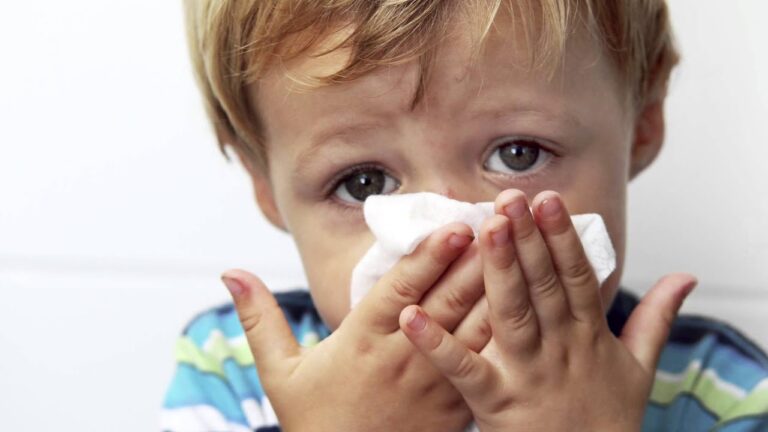
When I was a kid, my allergies were so bad that my eyes would swell shut, and I would miss school. A bit like the image of the boy, above. Allergy testing and immunotherapy (“allergy shots”) changed my life for the better.
But what can we conclude when people have these signs and symptoms, but all of their allergy testing is negative?
The term used is “non-allergic rhinitis”.
Possible causes of non-allergic rhinitis include:
- Environmental irritants. Particulate pollutants, dust, smog, secondhand smoke, chemical fumes, can all cause rhinitis without true allergies. In children, one of the most common sources of environmental irritants that I have found in my clinics is the chlorinated pool.
- Hormonal changes. Women, and especially pregnant women, can experience non-allergic rhinitis as a result of hormonal changes. See my article on Rhinitis of Pregnancy for how to manage that.
- Infections. A common cause of nonallergic rhinitis is a viral infection – a cold or the flu. This should clear up within 2 weeks. Infectious rhinitis can become chronic, and usually includes a sinus infection – chronic rhino-sinusitis.
- Foods and drinks. Some foods can cause rhinitis and swelling of the nasal membranes – with resulting nasal congestion – without true allergies.
- Medications. Some medications can cause nonallergic rhinitis. Examples include the non-steroidal anti-inflammatory drugs (NSAIDs), including aspirin and ibuprofen, blood pressure medications or heart medications.
- Over-use of nasal decongestant sprays (oxymetazoline) can cause rebound nasal congestion – “rhinitis medicamentosa”. Click on this link for a Review of Rhinitis Medicamentosa.
Complications from non-allergic rhinitis include:
- Nasal Polyps. These are benign growths that develop from the nasal and sinus lining. These can block sinus openings and even obstruct the nasal airway, making it difficult to breathe. An Otolarngologist (Ear, Nose & Throat Doctor) should evaluate an growth in the nose or sinuses.
- Chronis rhino-sinusitis (CRS). Prolonged swelling of the nasal and sinus lining can block the sinus openings, increasing the risk of developing sinusitis. Sinusitis lasting longer than 3 months is considered “chronic sinusitis”. It is nearly always associated with chronic rhinitis too, and the term chronic rhino-sinusitis has been adopted by experts.
- Ear Infections. Chronic swelling of the nasal lining tissues (mucosa) is often associated with inflammation and swelling of the Eustachian tube lining as well. Dysfunction of the eustabhian tubes will result in middle ear infections – otitis media.
- Decreased quality of life. Chronic rhinitis, or CRS, have been shown to severely and negatively impact quality of life – as much or even more than other chronic diseases that we think of as severely affecting quality of life: diabetes or heart conditions. Here is my 5-Step Program to eliminate CRS.
All of these complications should be evaluated by an Otolaryngologist.
Are there symptoms that help distinguish Allergic Rhinitis from Non-allergic Rhinitis?
The short answer is “not really”, or at least, “not much”.
Along with my colleagues at Nationwide Children’s Hospital (Dr. Elizabeth Erwin) and the University of Virginia Health System (Dr. Larry Borish), we had evaluated over 150 children with chronic rhinitis. We performed allergy testing on them, assessed the volume of their nasal airways using technology called “acoustic rhinometry,” and had their parents describe all of their signs and symptoms through a detailed questionnaire.
Bottom line? The only symptom that separated the children with rhinitis and detectable allergies (positive allergy tests) from those with non-allergic rhinitis was itching – itchy eyes, specifically. This study is in press, to be published in the American Journal of Rhinology and Allergy.
When severe, the itchy, irritated eyes swell shut – like mine did when I was a wee lad, and like the photo of the boy above.
So, if your little boogorhead has itchy eyes, consider allergy testing.
What good is allergy testing?
Well, defining exactly what your boogorhead is allergic to gives you the option of desensitization – immunotherapy.
That involves gradually introducing the allergen in increasing amounts to help build a tolerance – allergy shots, or even drops under the tongue (sublingual immunotherapy, or SLIT).
We haven’t touched on the possibility that you can have an allergic reaction to an allergen that we simply do not test or. That is, allergy tests look for reactions to common allergens found in nature. Oddly, they do not look for allergic reactions to things that are common in the human environment, but which are synthesized – the various chemicals or additives in the dyes used to color our clothing, furniture, wall-coverings.
So, I conclude that many people with severe rhinitis that fits all the signs and symptoms of Allergic Rhinitis, but who have completely negative allergy tests, might still be reacting to some allergen in their environment that we cannot test for. Perhaps I will explore this further in a future post. I also plan to review all of the many ways that we can test for allergies.
When your rhinitis is truly not allergy-related, the search for the cause should begin. Find the irritant(s) responsible for your rhinitis. Eliminate it / them from your environment. Consider the many ways to reduce toxins and irritants in your life, reviewed here previously.
As always, I am an evangelist for regular nasal saline rinsing for optimal nasal hygiene.
For both allergic and non-allergic rhinitis, saline rinses will be beneficial!
_______________
Resources:
Image Credit: Image by James Heilman, MD: under creativecommons license, via Wikimedia Commons.
Epidemiologic Analysis of Chronic Rhinitis in Pediatric Patients. Erwin EA, Faust RA, Borish L. In press, American Journal of Rhinology and Allergy, 2011.
_______________
Until next time, please, “be excellent to one another.”
Hi, I’m Russell Faust, author of this blog, and I appreciate your comments and questions. Keep ‘em coming.
I invite you to subscribe (it’s FREE) to this blog for weekly updates – you won’t be swamped by updates, I simply cannot write for the blog everyday.
Click here to receive free weekly updates: (http://eepurl.com/FGnP)
Type in your best email address (the one you actually use).
Your email is safe - will never be shared or sold. Ever.
Click here to read our Privacy Policy: http://wp.me/PR4iB-r
When the confirmation email from boogor doctor arrives, click on the link to give your okay to receive free weekly updates, occasional book reviews or product reviews, occasional discount-coupons for products that I use (not affiliates), all without needing to visit the website.
It’s free, it’s convenient. No ads. No spam. You can un-subscribe at any time. How cool is that?
Stay Informed.
Stay Healthy.
Best of health and success to you and your families.
Until next time, remember … you can pick your friends, and you can pick your nose, but you can’t pick your friend’s nose (unless you’re a boogor doctor :~D)


Hello and thank you for stopping by "Ask the Boogor Doctor". This site is dedicated to helping you achieve optimal health for your children, following an integrative holistic approach to care of the Pediatric Airway: pediatric sinusitis, allergies, asthma, rhinitis, reflux, otitis, and all pediatric ENT.
Lisa
29. Jul, 2011
I have had sinus headaches all my life and never knew that hormones could play a role in them. You mention pregnancy, would PMS and Menopause also play a role in them? I hear of women who no longer get the headaches after menopause. Was hoping I had something to look forward to.
Russell A. Faust, PhD, MD
04. Aug, 2011
Hi Lisa,
Yes, hormonal balance does influence rhinitis and nasal congestion – including a woman’s monthly cycle, and changes associated with menopause. Perhaps there is something to look forward to after all?
Thanks for visiting, and for taking time to contribute.
RF (boogs)
monika
12. Feb, 2012
Hello doc,
You have a fabulous and very informative website. I have a couple questions related to my 5 year old:
1. He has had stuffy nose and morning cough since he was 2 or 3 years old. Recently he had a wheezing incident and so we had him allergy tested. How accurate are these tests? I have heard of food allergy tests being very inaccurate. He tested allergic to grass, trees and milk. Milk seemed so unlikely to me since he has it regularly without any digestive issues
2. I have heard great reviews of Sinupret for allergy and even asthma. What is your experience with it?
3. is there a good natural allergy medication out there which can be used in addition to nasal rinses.
Thanks!
Monika
Russell A. Faust, PhD, MD
16. Feb, 2012
Hi Monika,
Most allergy tests are not great for children. Their accuracy seems to increase with age throughout childhood, but they are especially inaccurate for younger children. I have no personal experience with Sinupret, although I have had enough parents report benefits from Sinupret that I endorse it on my site. The best addition to nasal saline rinses is Manuka honey, in my opinion. It is such a soothing additive, and has such strong anti-microbial properties, that I recommend it highly. In addition, I use Xylitol in my own saline rinses as an anti-microbial additive. I also carry a small plastic squeeze-bottle of saline containing Xylitol in my pocket, and spray a couple toots every couple hours for optimal nasal hygiene and to reduce the incidence of URI’s. The only one that I am aware of is from Xlear.com – both Manuka and the Xlear products are listed on the boogordoctor’s Amazon Store, over on the right column of this blog. There are some decent books listed there too.
Thanks for visiting and for sharing. Please do come back and keep us updated on how your little boogorhead is doing :))
RF